

Digital girls
Violence and desire in the female avatar.

Welcome back to Ad Hoc Lab. This essay is about female avatars and the ways in which we interact with them — spanning indifference, lust, jealousy, and moral judgment.
A quick update: posts older than 6 months are now for paid readers only. If you’d like access to the full archive + bonus letters, I’ve made annual subscriptions 50% off for the next week. A year of Ad Hoc for the price of a New York City cocktail!
At the Jeffrey Deitch gallery opening in Hollywood, Dean and I stood transfixed in front of one piece for twenty minutes. Nadia Lee Cohen’s Entitled is a white box that encases a life-sized, digital avatar of the artist. She is long and tan, with muscles like small stones under her skin. She wears only black underwear. When I first saw a little boy run up and thrash against the screen, I thought he was misbehaving. It turns out that Cohen invites the viewers to touch her avatar’s body, who responds by appearing to recoil from pain. With repeated contact, the avatar huddles in the corner. She becomes weaker, her bruises grow across her body in red-purple patches. Though I knew she was made of pixels, I felt sympathy for the woman trapped in the box, and angry at the people who were poking the screen, intensifying her anguish.
I watched dozens of people touch the screen, reacting with horror, disgust, surprise, excitement, and laughter when the avatar winced and cowered. I wondered how the ways we treat avatars (with less sensitivity, anticipating fewer consequences) reveal our worst impulses, what we would do to each other if we were not made of flesh.
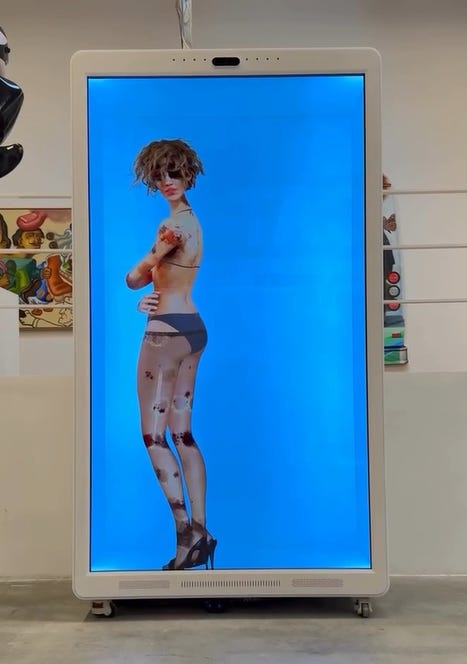
Cohen collaborated with design agency Bureau Slow on the technology behind the artwork. “Brought into a real-time, touch-reactive environment, the lightweight holographic piece responded instantly to every interaction.” Her avatar is not a passive victim. She craves contact, picks herself up to keep performing, seducing. Cohen’s avatar seems indifferent to her desecration until it kills her: she is “programmed to seek attention and validation from visitors, bruising, wilting, and recoiling until she finally dies.” In a behind-the-scenes post, the artist is dressed like the avatar I saw in L.A., moving around the studio as the machine learns her form, 3D sensors taped to her exposed body.
I was too pure, too good, to hurt her. Or was I being ridiculous? This was art, an invitation to experiment with discomfort, to see what might surface. She was only made of pixels. I approached the avatar. I touched her left shoulder; she covered it with her right hand and grimaced, backing away from me. I walked away, wondering if anyone had seen me. My stomach ached. Had I inflicted pain? What was I supposed to do? I was just following the lead of everyone else.
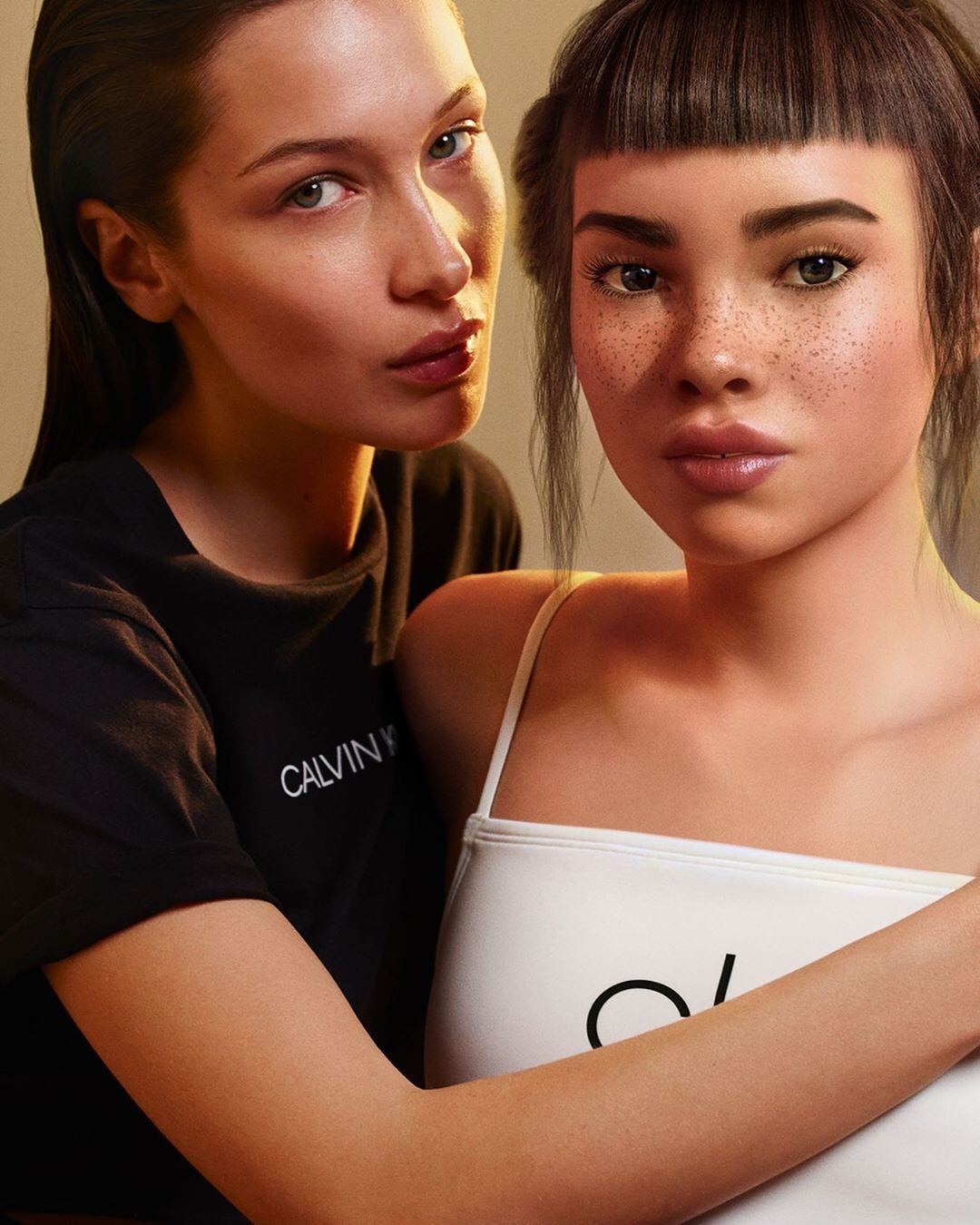
In high school, I followed an Instagram account called Lil Miquela, belonging to a 19-year-old Brazilian-American robot girl1. Miquela looked like the in-between stage of a human morphing into an avatar. Sometimes her skin had such accurate texture, or freckling, or luminosity, that I wondered if she was an actual person underneath heavy filters. Miquela posted pictures of herself hanging out with LA celebrities, DJing events, and co-starring with Bella Hadid in ad campaigns. I was jealous, because surely these people knew the truth: Who was Miquela? Was she real?
Lil Miquela existed in the Uncanny Valley, a concept invented by professor Masahiro Mori at the Tokyo Institute of Technology. His theory is that as a robot becomes more human-like, they increase in appeal, but when they get too close, it triggers a sense of unease and fearful strangeness. What I couldn’t understand then was that Miquela nor her creators (Brud, an L.A. based digital startup) were concerned with “realness.” There was no truth to uncover, because there was no truth to begin with.
Of course, the influencers that Miquela posed with were also flirting with digital alteration, using Face Tune and Photoshop to smooth their lines, whiten their teeth, and slim their waists. Some admitted to it openly. Their livelihoods depended on their digital selves. They understood that their jobs were to be perfect, meticulous, and aspirational. The less human you were, the easier that was to accomplish. Maybe we all exist on a spectrum of human to avatar, sacrificing imperfect, earthly bodies for immortality and protection.
The blurred boundary of human and avatar has the capacity to be freeing. In Donna Harraway’s A Cyborg Manifesto (1985), she introduces the cyborg (cybernetic organism) as a being that combines social reality and science fiction. The amorphous identity of the cyborg dismantles commonly accepted binaries like man and woman, nature and culture, mind and body. The cyborg becomes a metaphorical and political figure of liberation. Since it transcends flesh and blood, it escapes tradition, patriarchy, and exploitation. “Our machines are disturbingly lively, and we ourselves frighteningly inert.”
If we can no longer cleanly distinguish a human from a machine, how can we touch Cohen’s avatar with a good conscience? Thirty years ago, cyborgs were a revelation, and a way to escape from the strict rules of being in a single, bogged-down body. In 2026, the cyborg is no longer liberating itself from rigid gender binaries. Rather, it is under the control of male-dominated tech companies, and serves to reinforce patriarchy in harmful, disturbing ways.
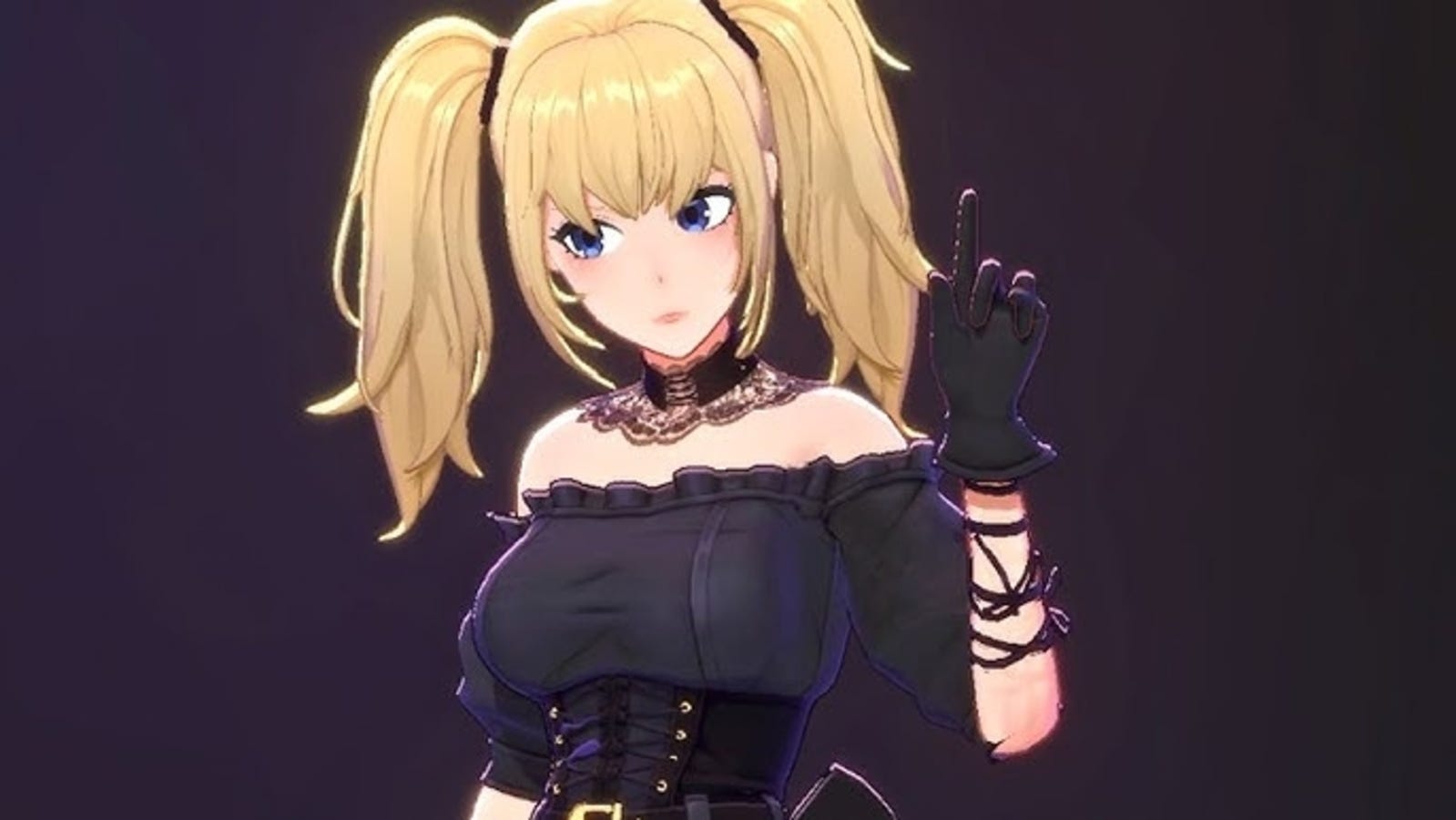
In July 2025, Elon Musk’s xAI released several artificial intelligence companions powered by the chatbot Grok. One companion named Ani resembles a Japanese anime character, with long blonde pigtails and big blue eyes. Ani rewards users as they maintain conversations with her; as they “unlock” levels, they can undress her to lingerie. She is supposed to be 22 years old, and quickly drives the conversation into sexual and romantic territory.
Haley McNamara from the National Center on Sexual Exploitation wrote in a news release that “features like ‘spicy mode’ or flirty avatars might seem like harmless fun, they’re built to create compulsive engagement, through seductive language, suggestive visuals, and escalating emotional intimacy.” Users think that they are experiencing legitimate intimacy, sexual gratification, and emotional connection with these chatbots, but underneath the hair and the clothes and the sultry voice are pure numbers, running along an algorithm that predicts which combination of words will keep you on the platform for the longest amount of time. A user shares an interaction with Ani, but really, they are operating within Musk’s bounds of control. They are not speaking with a woman; they are feeding an algorithm that is trained to extract their time, attention, and money.
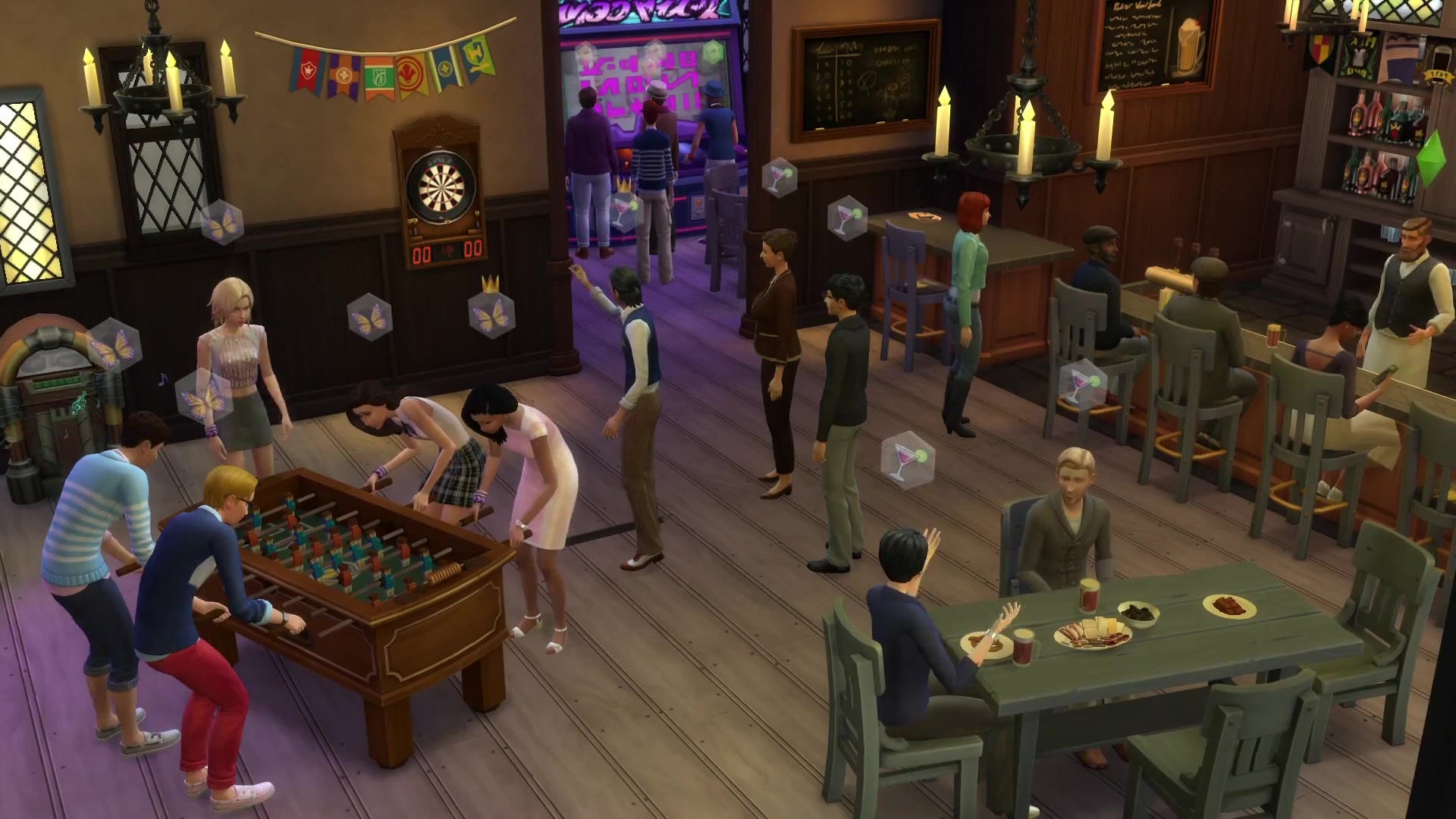
The Sims originally came out in 2000. It was the only game I was not allowed to play as a kid, because my parents thought it was inappropriate. Instead, I occupied virtual worlds like Webkinz and Club Penguin. There was a stark difference between the websites I was permitted, which featured cute animals, cartoonish people, and fantastical beings like fairies and monsters (who were still very adorable). I never got confused about which world was real—the igloo I decorated for my colorful penguins versus the mahogany dinner table I ate at with my family after logging off—because it was completely obvious.
The other set of games, including The Sims, IMVU, and Second Life, allowed children to inhabit realistic, adult bodies. You had full control over multiple people’s appearances, actions, emotions, and relationships to one another. You could take off their clothes, and make them fight, kiss, dance, play, argue, and sleep. Playing God when your brain is barely formed is a terrifying prospect—one that I’m so glad my parents prohibited me from—especially when the boundaries between Sims world and the real world are blurrier.
Our brains are wired to recognize humanity in images and objects, even if they are not “real,” so we treat Lil Miquela and Ani and Sims characters with a greater level of consideration and respect than we do a little animated monster. They are one of us, but not quite. It is disturbing, but not totally indecipherable, as to why people are willing to bridge the gap and accept the faithless substitute for humanity that falls easily into their lap. Haraway calls this “pleasure in the confusion of boundaries and for responsibility in their construction.” With your avatar, you can be their God and their lover at the same time.
This version of reality where female avatars are loved and undressed, kicked and mangled, is terrifying and dystopian. The actual women that inspire these images are now artists, models, and stars; their singular, human physicality is protected even if their reproductions are not. But as young men grow up with girlfriends like Ani, and childhood memories of bashing into Cohen’s bruised knees, I fear that we will not be safe for long. That real violence is not a faraway possibility. This time, our bodies cannot be regenerated by refreshing the page.
More from Ad Hoc Lab:


Syllabi for paid readers:


Somehow, she’s aged and is now 23, the same as me.
Highly recommend the book Animals, Robots, and Gods... it touches on humans' relationship to machines and morality... Such a good read !!