

Exercise might just be the cure
STUDY 03: EXERCISE

Welcome to the third Study of Ad Hoc Lab. This essay examines exercise as a means of escape, discipline, and connection. You can read more about the Lab here.
OH, TO WALK A MILE IN PARIS
When I lived in Paris last October, I did no “real” exercise for one month. I stretched on the occasional evening, but mostly, I walked. I set directions on my phone for destinations specific (Musee D’Orsay, Bastille, Sacré-Cœur, Grand Palais) and nonspecific (English-language bookstores, bakeries with chocolate-studded brioche, vintage stores along Rue de Turenne). I spent hours watching the light coruscate across the Seine, peering through windows, twisting my neck to see the ends of the wrought-iron balconies that stretched across second-floor apartments. I studied the coats and leather boots and pursed expressions of people sitting at outdoor tables, speaking rapidly, flicking cigarettes between their fingers.
It’s very easy to measure walking distance in New York (I learned at a very young age that one mile is twenty blocks long). At the risk of sounding like a naive American, I find it amazing that in Paris I could walk five miles without meaning to. I was swallowed by the city, delighted by each curve, street sign, dog-off-its-leash.


I came home with a twinge of guilt for abandoning my workout routine of at-home mat pilates and the occasional run. After receiving the fiftieth newsletter from The New York Times about the benefits of lifting heavy weights (heart health, muscle development, maintaining bone density, et cetera…) I decided to commit to strength. I downloaded an app that instructed me to complete sets of Romanian deadlifts, bent-over rows, and hammer curls. I was transported to my high school’s basement gym, where our former-Navy-SEAL track coach yelled at us from behind the squat rack, “PAIN IS JUST WEAKNESS LEAVING THE BODY.”
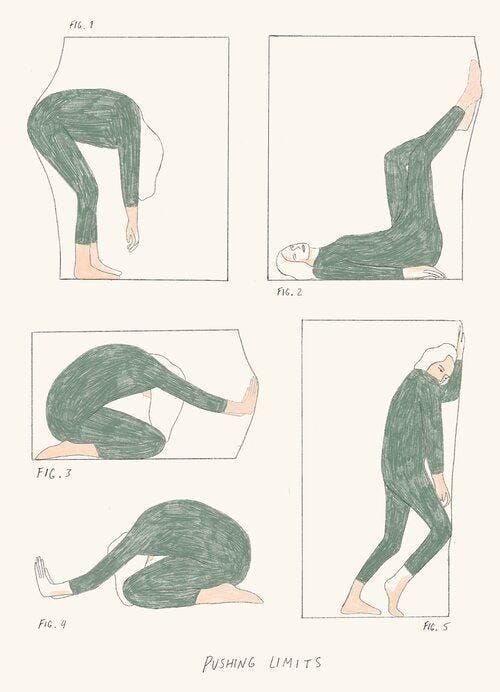
Exercise often necessitates putting your body through temporary strain or discomfort in order to achieve a desired outcome. This outcome can manifest as something aesthetic (“I want to grow my glutes”), physical (“I want to lower my blood pressure”), or emotional (“I want to feel confident”). You may have little control over your work schedule, your boss, or your responsibilities, but you can will your body to run a mile, or lift a twenty-pound weight ten times in a row.
A problem arises when you think about exercise as an input for a specific output. The action does not guarantee the result. The pilates craze of the last couple years was born from the idea that a highly-tailored, low-impact workout would produce a long, toned body. It was an attractive alternative for women who avoided weightlifting out of fear that they’d become “bulky.”
Research indicates that it is very hard to recompose the shape of your body. Our bodies resist change—homeostasis is how we’re wired to survive—but still, we try as hard as we can to become bigger, smaller, faster, and stronger. It’s a shame our focus is so misplaced.
26 MILES OF TORTURE/BLISS
Running, a primary source of my high school torment, has recently eclipsed all other forms of exercise to become the most popular, public, social activity in New York. Running enables friend-making, relationship-forming, outfit-buying, fuel-strategizing, and humble-bragging (“I’m excited to announce that I’ll be running the NYC marathon this fall…”). Before the pandemic, I used to run along the Central Park bike path and recognize kids who used to be on my track team. Now, on weekends, there are so many people in Hokas and neon leggings and wraparound sunglasses that it’s hard to cross from one side to the other.
In his book What I Talk About When I Talk About Running, the novelist Haruki Murakami explains that long distance running provides the physical discipline and tolerance for pain that allows him to embark on ambitious creative projects. I like his idea of exercise flowing into the other areas of life, rather than being a discrete activity. For Murakami, pain is a necessary part of accomplishment, sensitivity, life itself:
“But pain seems to be a precondition for this kind of sport. If pain weren’t involved, who in the world would ever go to the trouble of taking part in sports like the triathlon or the marathon, which demand such an investment of time and energy? It’s precisely because of the pain, precisely because we want to overcome that pain, that we can get the feeling, through this process, of really being alive--or at least a partial sense of it. Your quality of experience is based not on standards such as time or ranking, but on finally awakening to an awareness of the fluidity within action itself.”
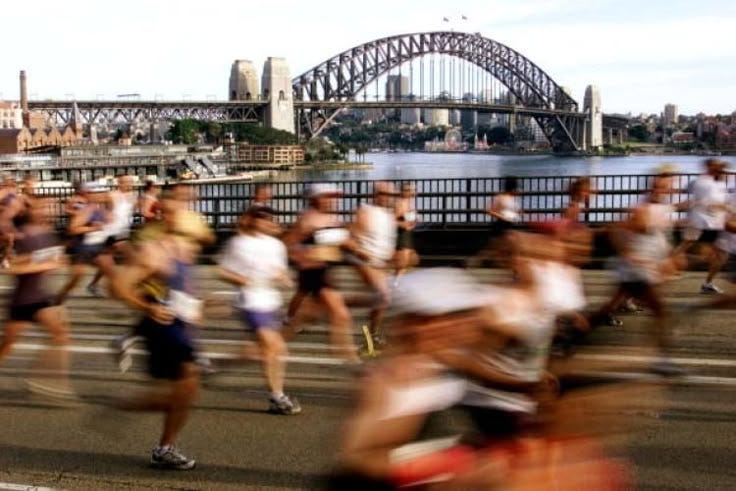
In November, my friends and I watched the New York City marathon. We stood on Fifth Avenue, and I tried to imagine what my body might feel like after running twenty-three miles and anticipating three more. The marathon is always a revelatory experience: I am amazed by the capacity of the human body and its tolerance for pain. After the young, lean, aerodynamic frontrunners that resemble floating apparitions (you see them, and then in a flash, they’re gone), marathoners of all ages and shapes and postures and paces pass by. The sidewalk cheers are loud and spirited. It’s the day in the city with the most shared joy.
French sociologist Émile Durkheim coined the term “collective effervescence” to describe the intense emotions and sense of unity around a shared purpose. Alone, exercise can be a way to exert control over your body and your perception of the world. Together, it might allow us to submit to the energy of the environment and let it carry us forward.
ON AND OFF THE ROCK WALL
In the time between drafting and editing this piece, I’ve abandoned my weightlifting practice and reactivated my membership at a rock climbing gym. My first time bouldering was in college, when Phaedra and I were waiting for our pavlovas to cool. I climbed for seven months, then stopped suddenly, without a real reason.
In January, I joined a New York gym, along with other recent graduates from New England liberal arts colleges, creative downtown types, software engineers, and high schoolers. Long-limbed, long-haired climbers carry canvas bags of crumbly chalk. Friends watch each other ascend, shouting advice at the wall: “HOOK YOUR LEFT FOOT, CRIMP YOUR FINGERS, JUMP AND REACH!” Some climbers are so controlled and nimble, they move as if they are following an invisible choreography.
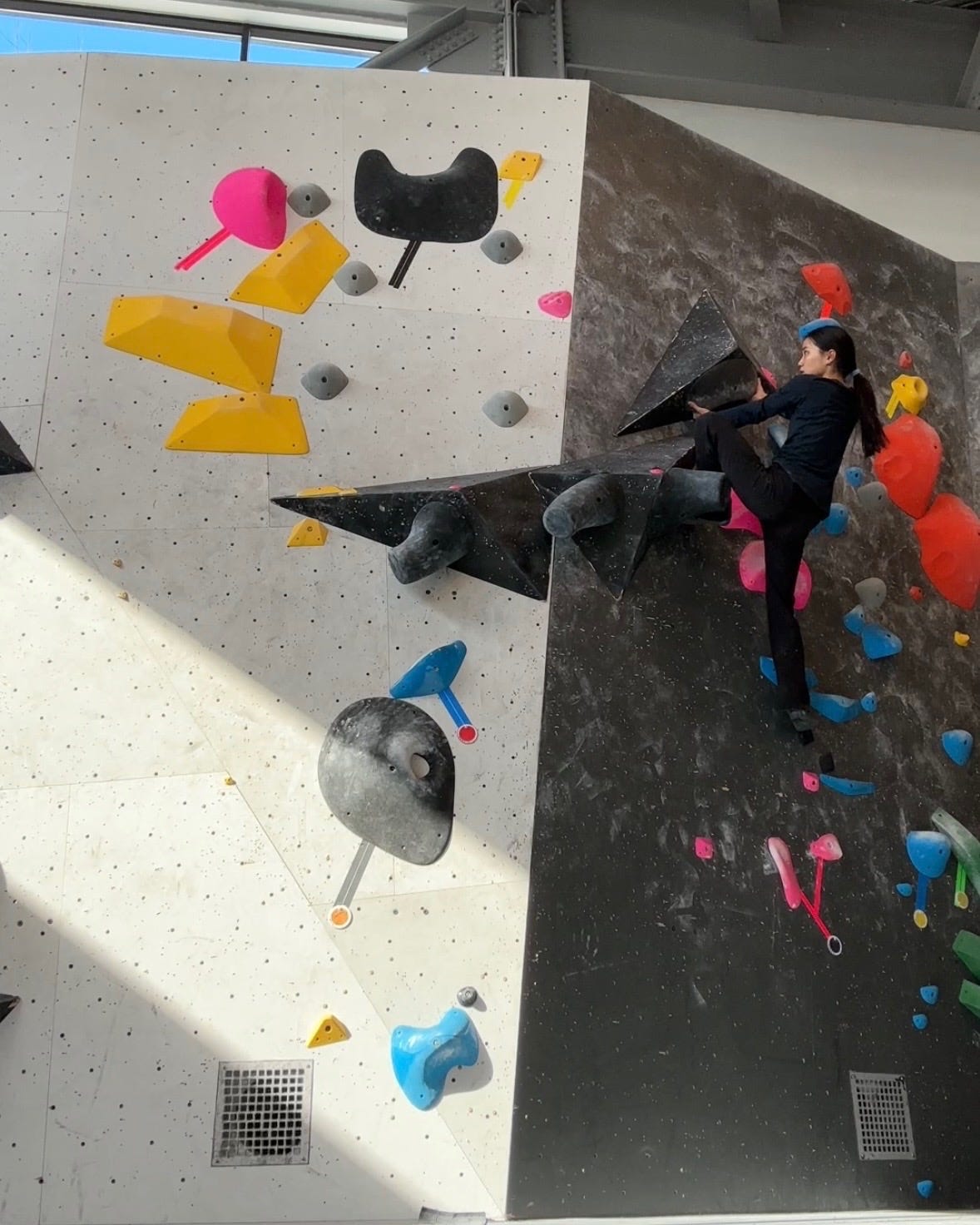
Climbing definitely feels like exercise—my fingers ache, my forearms pulse and bulge, my heart races as I fall from the top and rock back onto the mat, staring at the ceiling. But it also feels like meditation, like dancing, like solving a corporeal puzzle.
When I go to the gym in the morning, I feel like I’m harboring a secret through the work day. My friends have similar sentiments about their morning runs along the highway, their yoga classes in ninety degree, neon-lit rooms. It may be silly, but I think it’s important to remind ourselves that we may sit on Subway cars, stand in elevators, hunch over our desks, and collapse onto our couches, but we are also capable of agility, speed, endurance, and strength.
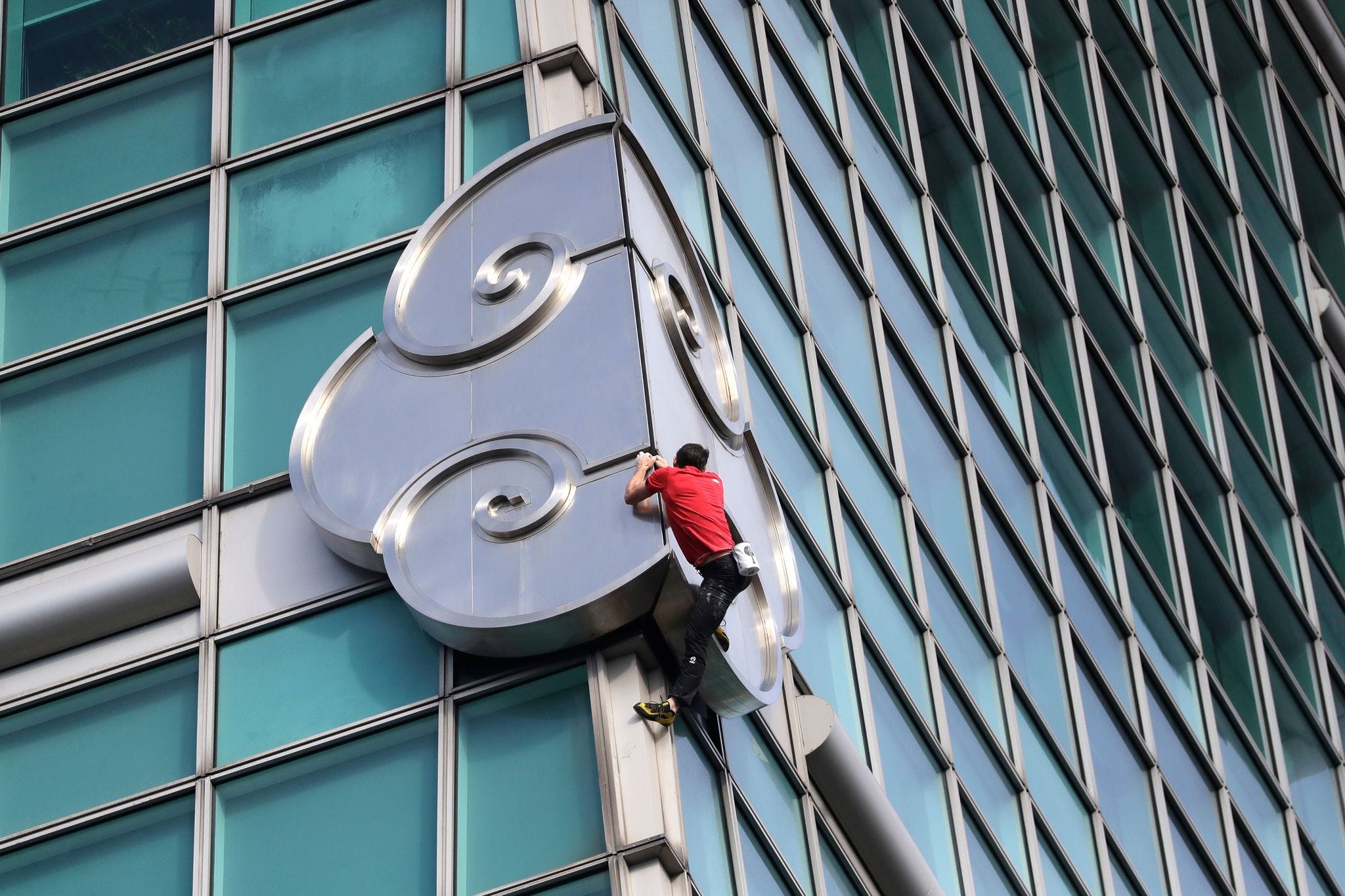
A few weeks ago, I watched Alex Honnold climb Taipei 101 on a Netflix livestream. I was unnerved by how nonchalant his excitement felt, how casually he lifted his hand off the building to reach into his chalk bag, or wave to a fan though a blue glass pane. I still can’t comprehend how his brain works, but now I think about him when I climb: “IF I’M TIRED RIGHT NOW, IMAGINE HOW ALEX MUST HAVE FELT!”
Exercise requires a strange combination of pain, relief, pleasure, motivation, and acceptance. When I watched Alysa Liu skate at the Olympics, I cried at the freedom in her movement, how she made precision and grace look so FUN. Exercise, in its peak form, is a state of complete attunement to your heart, your limbs, your energy, and your environment. Exercise is transcendence. A simultaneous experience of gripping hard and letting go.
This was the third study of Ad Hoc Lab. Next Monday’s letter for paid subscribers will be a compilation of Materials related to exercise. If you’d like access to the syllabus of books, movies, art, and more, you can upgrade your subscription here.
One of my goals this year is to give bouldering a try! I’m a bit intimidated but building a bit of strength at the gym first so I think by the summer I may be ready… loved this piece and really resonate with how I view movement now in my late 20s <3
Can confirm: Exercise is absolutely the cure.